
The short answer is that Dubai’s real estate market is expected to continue its upward trajectory through 2026 and into 2027, but with a crucial caveat: the growth will be highly segmented. We’re not looking at a blanket boom where every property type and every location sees the same returns. Instead, the market is maturing, demanding a much more nuanced approach from investors and end-users alike. The days of simply throwing money at any off-plan project and expecting a quick 30% flip are, frankly, over. The next two years will be defined by strategic buying, where location, developer track record, and genuine demand for the product will separate the successful investments from the stagnant ones.
This isn’t just about reading the tea leaves; it’s about synthesising the hard data, the global capital flows, the local regulatory shifts, and the sheer volume of new supply hitting the market. The market has moved past recovery and is now in a phase of sustained, albeit more complex, growth. For anyone looking to buy, sell, or simply understand their current portfolio, ignoring the detailed forecasts for 2026 and 2027 would be a costly mistake.
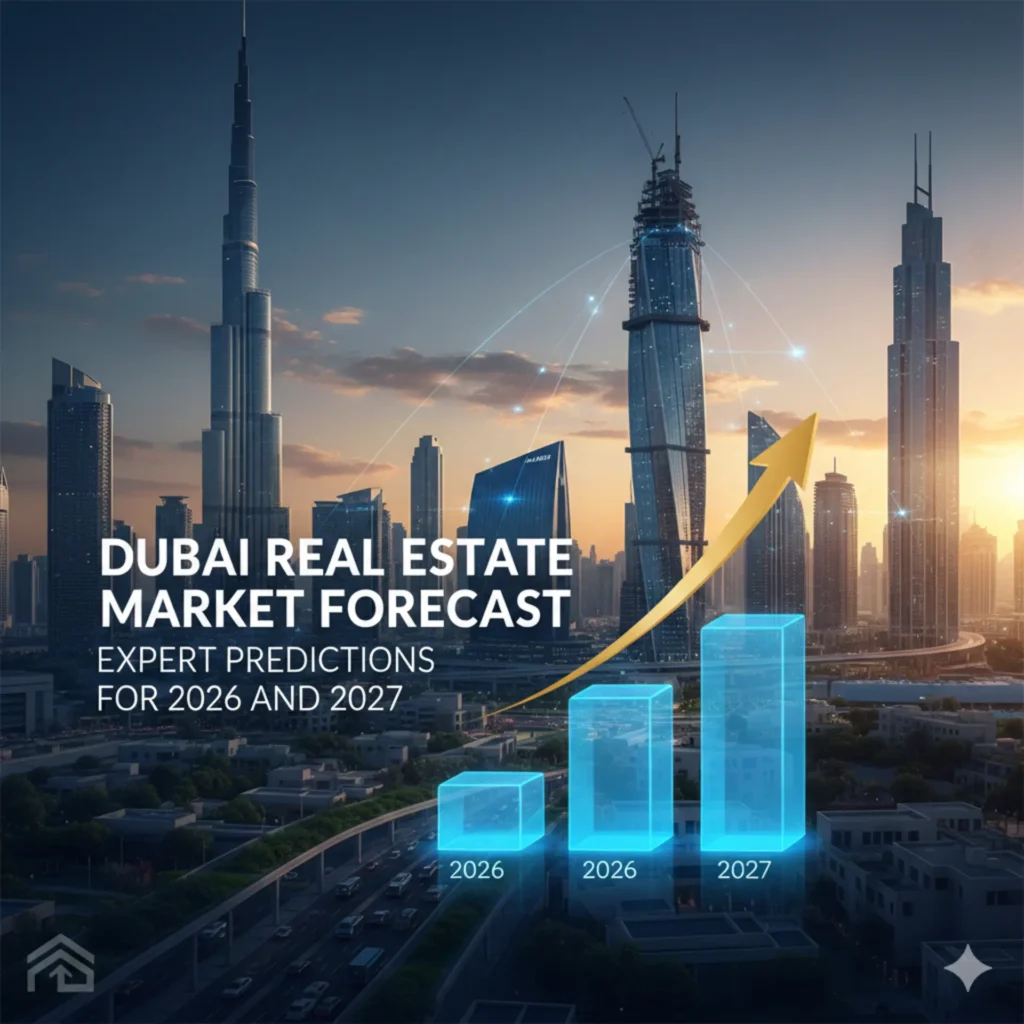
The market has been on a tear, fuelled by post-pandemic migration, geopolitical stability, and a proactive government that understands the value of foreign investment. But sustained growth always breeds questions about sustainability. That’s why we’re cutting through the noise to provide a clear, data-backed outlook. We’re going to look at the big picture, the global forces, before drilling down into what this means for prices, supply, and your specific investment decisions over the next two years.
The Macroeconomic Drivers Shaping the Forecast
Effect of Global Economic Trends and Oil Prices on Dubai Real Estate
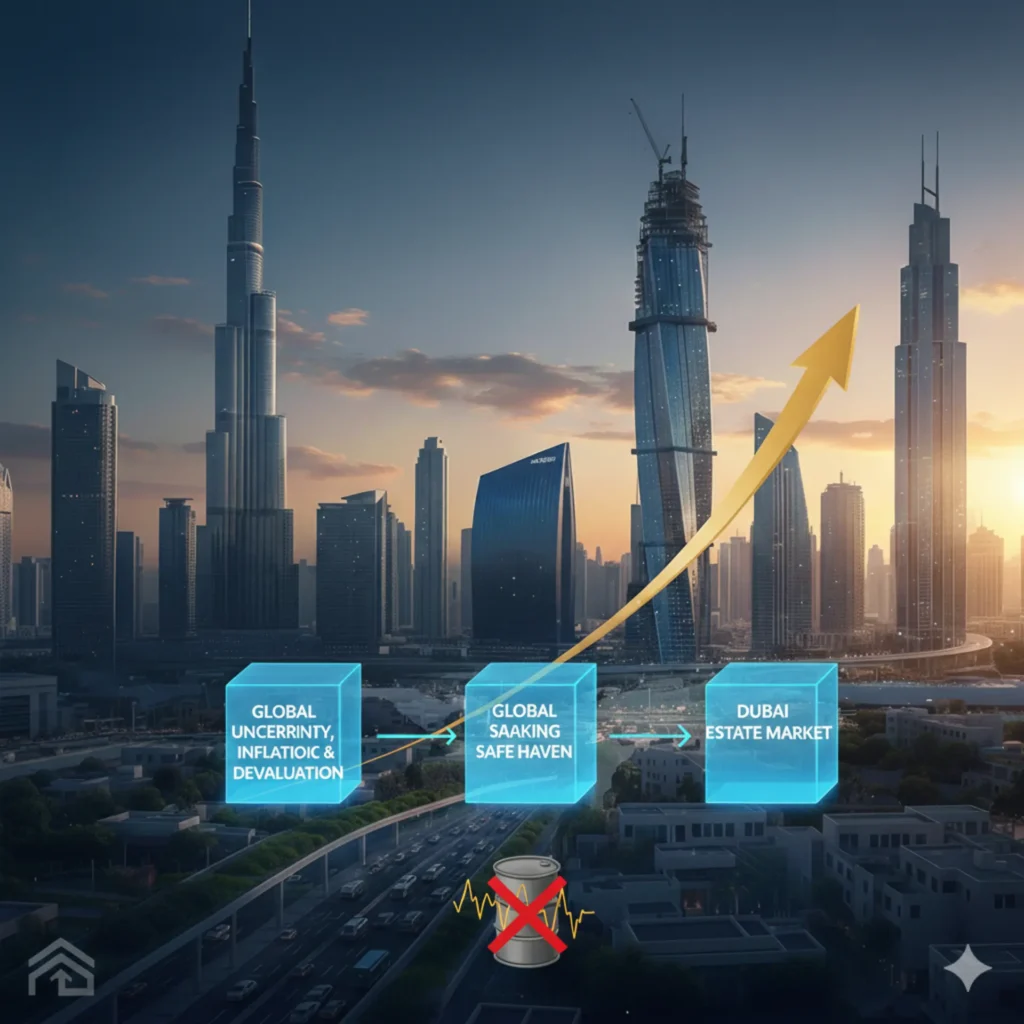
Here’s the thing: the old narrative that Dubai’s property market rises and falls purely on the price of oil is largely outdated. While the Emirate’s economy is still fundamentally linked to the region’s energy wealth, the real estate market has become remarkably decoupled. Today, the primary driver isn’t Brent Crude; it’s global capital seeking a safe, tax-efficient, and stable haven.
The influx of high-net-worth individuals from Europe, Asia, and other parts of the Middle East has created a demand floor that oil price fluctuations simply can’t shake. Think of it like this: when global uncertainty spikes, money looks for a secure place to park itself, and Dubai, with its strong regulatory framework and zero-tax environment, is often the first choice. This is why, even during periods of moderate oil price volatility, the luxury and prime segments of the Dubai market have shown such resilience.
Actually, the more pressing global trend is inflation and currency devaluation in other major economies. When a European investor sees their savings eroded by inflation, the stability of the UAE Dirham (pegged to the US Dollar) and the potential for capital appreciation in Dubai becomes incredibly attractive. This is a powerful, ongoing tailwind for the market, one that is likely to persist through 2027 as global economies continue to grapple with post-pandemic financial restructuring.
Impact of Rising Interest Rates on Dubai Property Affordability and Mortgage Payments
Well, this is where things get a bit more complicated. Because the UAE Dirham is pegged to the US Dollar, the UAE Central Bank generally follows the US Federal Reserve’s lead on interest rates. When rates rise, the cost of borrowing for a mortgage in Dubai goes up, just like anywhere else. This directly impacts affordability, particularly for end-users and mid-market buyers who rely on financing.
For the luxury segment, the impact is minimal. These buyers are typically cash-rich and aren’t overly concerned with a few percentage points on a mortgage. But for the average expat looking to transition from renting to owning a two-bedroom apartment, the increased cost of financing can be a significant barrier. This is why we see a slowdown in transaction volumes in the mid-market when rates are high, even if prices continue to climb due to cash-buyer demand.
The forecast for 2026 and 2027 must factor in the global interest rate environment. If the Fed begins to cut rates, as many predict, Dubai’s mortgage market will become instantly more appealing, unlocking a wave of pent-up demand from financed buyers. Conversely, if rates remain elevated, the market will continue to favour cash buyers, potentially widening the gap between the luxury and affordable segments. It’s a crucial variable to watch, and it directly answers the user query about the Impact of rising interest rates on Dubai property affordability and mortgage payments.
Key Market Segments: Price and Supply Forecasts
Will Dubai Property Prices Drop in 2026? Factors Influencing a Correction
The short answer is no, a broad-based price drop is highly unlikely. However, a correction in specific, over-hyped micro-markets is entirely possible. The current market strength is underpinned by genuine demand and controlled supply, unlike the speculative frenzy of previous cycles. The government, through the Dubai Land Department (DLD), has learned its lessons and actively manages the market to prevent runaway speculation.
The real risk of a price drop lies in areas where supply is set to surge dramatically in 2026. If a specific community has ten new towers completing simultaneously, and the underlying demand isn’t there to absorb them, you will see developers and secondary market sellers competing on price. This isn’t a market crash; it’s just basic supply and demand playing out locally.
For the prime areas, think Palm Jumeirah, Emirates Hills, and certain parts of Downtown, prices are expected to flatten or see moderate, sustainable growth. The demand for these trophy assets remains robust. The real question for investors is: are you buying into a market with genuine end-user demand, or one driven purely by short-term flipping? If it’s the latter, you might see a temporary dip in value as the market digests the new inventory.
Current Demand for Luxury vs. Affordable Housing in Dubai: Market Segmentation
The luxury segment has been the star of the show, and that’s not changing anytime soon. The demand for high-end villas and branded residences continues to outstrip supply, leading to record-breaking sales and price appreciation. This is driven by the influx of global wealth we discussed earlier. These buyers aren’t just looking for a home; they’re looking for a lifestyle and a secure asset.
However, the affordable and mid-market housing segment is where the real long-term opportunity lies, and it’s also where the pressure points are. There is a chronic undersupply of genuinely affordable, well-located housing for the vast majority of Dubai’s working population. This is why rental yields in this segment remain strong.
For investors, this segmentation is key. If you are chasing capital appreciation, you might still look at the luxury off-plan market, but you must be prepared for a high entry point. If you are chasing stable, high rental yields, you should be focusing on the mid-market areas that cater to the long-term resident population. The market is effectively running on two separate tracks, and your investment strategy needs to pick one.
Impact of New Supply and Inventory on Dubai Rental Prices and Yields
This is the big one for rental investors. The sheer volume of new units scheduled for handover in 2026 and 2027 will inevitably put pressure on rental prices in certain areas. When a master developer completes a large phase, the sudden availability of hundreds of new rental units can temporarily flood the market, causing rents to soften.
But here’s the nuance: the impact will be felt most acutely in areas that lack differentiation or amenities. A new building in a prime, established location with excellent facilities will likely maintain its rental premium. A new building in a less-developed area, competing with older stock, will have to drop its price to attract tenants.
For investors, this means being highly selective. You need to look at the Average rental yields in Dubai by community 2025-2026 and ask yourself if the projected new supply in that area is already factored into the yield. A high yield today might be unsustainable if a massive wave of new inventory is due next year. This is why a deep dive into the specific supply pipeline for your chosen community is non-negotiable.
Investment Risk and Opportunity Assessment
Is There a Property Bubble in Dubai in 2026? An Analytical Perspective
The “bubble” question is the one everyone asks, and it’s usually asked by people who remember the 2008 crash. Actually, comparing the current market to 2008 is a bit like comparing a modern smartphone to a rotary dial phone; they are fundamentally different machines. The 2008 crash was fuelled by unregulated speculation, high loan-to-value ratios, and a lack of transparency.
Today, the market is far more regulated. The DLD has implemented strict controls on off-plan sales, including requiring developers to have a significant portion of the project completed before they can sell. More importantly, the current demand is driven by end-users and cash buyers, not highly leveraged speculators. When you have genuine wealth moving into the city, it creates a much more stable foundation.
However, a healthy dose of scepticism is always warranted. While a catastrophic, market-wide collapse is unlikely, the risk of overpaying for an asset is real. If you buy a property today at a price that already factors in three years of future growth, you are essentially creating your own personal bubble. The key is to look at metrics like the price-to-rent ratio and compare them to other global cities. Dubai remains relatively affordable on a global scale, which is a strong argument against the bubble theory.
Capital Appreciation Trends in Dubai South vs. Palm Jumeirah Over 5 Years
This is a classic investment dilemma: established blue-chip versus emerging growth. Palm Jumeirah is your blue-chip stock. It’s a finite, prime location with a proven track record. It offers stability, prestige, and will always be in demand. Its capital appreciation will likely be steady and moderate, think 3% to 5% annually, but with very low risk.
Dubai South, on the other hand, is the high-growth, high-risk play. Its future is intrinsically linked to the expansion of Al Maktoum International Airport and the surrounding logistics and business hubs. If the vision for Dubai South materialises fully, the capital appreciation could be significantly higher than the Palm. But, and this is a big but, it’s a longer-term bet.
For investors, the choice depends on your risk appetite. If you need liquidity and stability, stick to the established areas. If you have a 7-to-10-year horizon and believe in the government’s infrastructure plans, Dubai South offers the potential for greater returns. It’s a trade-off between certainty and exponential growth.
Secondary Market vs. Primary Market Investment Returns: A Comparative Study
The primary market (off-plan) has been incredibly lucrative recently, often offering better entry prices and flexible payment plans. The returns are front-loaded: you buy at a discount, and the value appreciates as the project nears completion. This is where the quick money has been made.
The secondary market (ready property) offers immediate rental income and eliminates the risk of developer delays or non-completion. The returns are slower, more stable, and based on actual rental yields. For a cautious investor, the secondary market is the safer bet. You know exactly what you are buying, and you can start generating income immediately.
Here’s a simple analogy: buying off-plan is like buying a lottery ticket with a very high chance of winning a moderate prize, but you have to wait two years for the draw. Buying secondary is like buying a bond; you get a predictable, steady income from day one. For 2026 and 2027, as the market matures, the gap between primary and secondary returns is expected to narrow, making the secondary market increasingly attractive for yield-focused investors.
Regulatory and Urban Planning Influences
How the Dubai 2040 Urban Master Plan Affects Property Values in Specific Zones
The Dubai 2040 Urban Master Plan isn’t just a pretty document; it’s the government’s blueprint for where the next wave of infrastructure and population growth will occur. For property values, this plan is gospel. It explicitly outlines the areas designated for future residential, commercial, and green space development.
If your property is located in a zone earmarked for enhanced connectivity, new metro lines, or significant green space expansion, its value will inevitably benefit. Conversely, areas that are not part of the strategic growth zones may see slower appreciation. It’s a classic case of government policy creating value.
For example, the plan’s focus on increasing green and recreational spaces means that communities like Dubai Hills Estate, which already prioritise parks and open areas, are perfectly aligned with the long-term vision. This alignment acts as a powerful, non-market-driven support for property values in those specific zones.
Dubai Golden Visa Requirements for Property Owners in 2026: Latest Updates
The Golden Visa has been a game-changer, turning property investment into a pathway for long-term residency. This policy has fundamentally altered the demand profile, attracting buyers who are looking to relocate their families and businesses, not just their capital. This creates a much stickier, more stable buyer base.
While the minimum investment threshold for the Golden Visa is subject to change, the underlying principle remains: the UAE is actively using residency as a tool to attract high-net-worth individuals. Any future updates to the requirements will likely be aimed at fine-tuning this process, perhaps by adjusting the investment amount or adding criteria related to property type (e.g., ready vs. off-plan).
For investors, the visa acts as a powerful incentive. It’s not just about the return on investment; it’s about the return on life. The stability and long-term security offered by the visa are often the deciding factor for international buyers, and this demand will continue to underpin the market through 2027.
Conclusion and Key Takeaways
The consensus forecast for the Dubai real estate market in 2026 and 2027 is one of stable, segmented growth. The days of easy, speculative gains are fading, replaced by a more mature, analytical market. The market is not heading for a crash; it is simply entering a phase where due diligence matters more than ever.
The key takeaway is this: don’t buy the market; buy the asset. Focus on properties that align with the government’s long-term vision (2040 Plan), that are backed by developers with impeccable track records, and that cater to genuine end-user demand (either for rental or personal use).
For those still on the fence, the time for blanket assumptions is over. You need to understand the specific supply pipeline in your chosen area, the true cost of ownership beyond the purchase price, and how your investment goals align with the market’s segmentation. Ready to align your investment strategy with the 2027 forecast? Speak to our property intelligence team. The market is waiting, but it’s no longer waiting for the unprepared.